August 12, 2026
“I’d hate to go without it” – Alan Dwan on using Catchwise
Alan Dwan calls himself an old-school, pen-and-paper skipper. A few months in, Catchwise has become part of how he plans and reviews his fishing.Written by
Ann Elinor Aasen
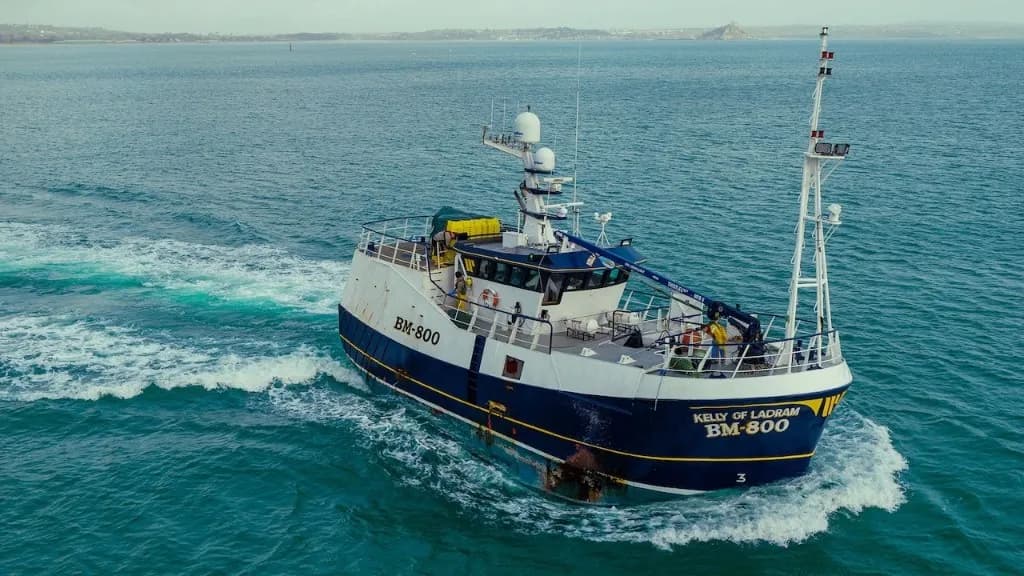
Kelly of Ladram. Image: Waterdance
In a recent interview with Hook & Net, Alan talks about using Catchwise aboard Waterdance's gillnetter Kelly of Ladram, working deep-water monkfish out of Newlyn — currently fishing around 180 miles south-west of Cornwall, in waters down to 200 fathoms.
He first noticed Norwegian boats using the system, uploaded three years of his own catch data, and worked with Catchwise when early tidal data needed tightening — Jonas added the fixes, and Alan says it is now spot on. After three months, he said he'd hate to go without it.
Historic catches, conditions and clear ground
Day to day, Catchwise helps him look back at his own hauls alongside seabed, tide and temperature — and check that he is not working ground that has already seen recent fishing activity.

As well as my own data, where I can look at historic catches linked to seabed sediment, state of the tide, water temperature and similar, I can also ensure that I'm working ground that hasn't seen other fishing activity for a few weeks beforehand.
Alan Dwan
Skipper on Kelly of Ladram
Built with skippers, for the fleet
For Alan, the value is not only the map layers — it is how quickly Catchwise can adjust the system based on what skippers need at sea.
Jonas at Catchwise is always available at the end of the phone, and this means that the system can be constantly improved as we learn more about how to use it. I can see the system being rolled out across the entire fishing fleet in due course, where it will become standard kit.
Alan Dwan
Skipper on Kelly of Ladram
Read more from the same Hook & Net series: Andrew Bremner on Boy Andrew, and UK skippers on Catchwise.
Read the full interview in Hook & Net
Prøv Catchwise
Prøv Catchwise på neste tur. Trykk på knappen under for å komme i gang. Ingen kredittkort nødvendig.